

For decades, aviation sustainability discussions focused almost entirely on aircraft. Airlines invested heavily in fuel-efficient jets and Sustainable Aviation Fuel (SAF) to reduce emissions in the air.
But today, attention is shifting to something that happens before takeoff and after landing: ground handling operations.
From baggage loading to aircraft pushback, these essential services rely on a wide range of equipment and vehicles operating directly on the airport ramp. As airports and regulators in regions including Egypt and the Middle East intensify their environmental commitments, sustainable ground handling is becoming a critical part of aviation’s decarbonization strategy.
Ground operations are no longer just about speed and efficiency. They are increasingly about reducing emissions, improving energy efficiency, and implementing green practices across airport infrastructure.
Ground Operations Are the Next Frontier for Aviation Sustainability
Ground Support Equipment (GSE) includes vehicles such as:
- Baggage tugs
- Belt loaders
- Pushback tractors
- Catering trucks
- Passenger stairs
- Aircraft service vehicles
Traditionally, most of this equipment has been diesel-powered, making it a major contributor to local airport emissions.
While a single aircraft may spend only a short time on the ground, ground vehicles operate continuously throughout the day, servicing dozens of flights. The environmental impact quickly adds up.
As sustainability regulations tighten globally and regionally, airports and operators are recognizing that cleaner ramp operations are essential for achieving long-term aviation climate goals.
What Is Electric GSE and Why Does It Matter?
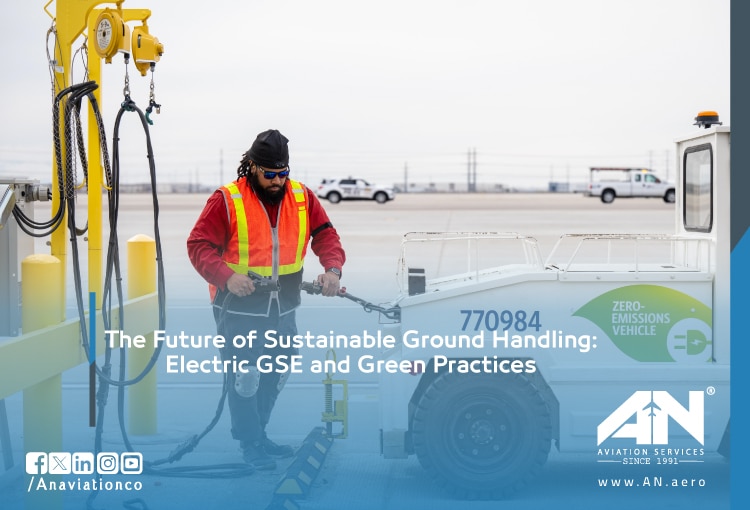
Electric Ground Support Equipment (Electric GSE) replaces conventional diesel engines with electric motors powered by battery systems.
These vehicles perform the same operational tasks but with zero direct emissions on the ramp.
Examples of electric GSE include:
- Electric baggage tractors
- Electric belt loaders
- Electric aircraft pushback tractors
- Electric passenger buses
- Electric ground power units
Modern electric GSE uses advanced lithium-ion battery technology, allowing many vehicles to operate for an entire shift on a single charge.
This transition represents one of the most practical and immediately achievable sustainability upgrades available to ground handling providers today.
The Dirty Secret of the Ramp
Airport ramps are often among the most emission-intensive areas of aviation operations.
A single diesel belt loader can produce several tons of CO₂ emissions annually. Multiply that by dozens or even hundreds of vehicles at a busy airport, and the environmental footprint becomes significant.
Historically, these emissions have been overlooked in many corporate sustainability reports because they fall under indirect operational categories.
However, that is changing.
Regulators and airlines are increasingly examining Scope 3 emissions, which include the environmental impact of third-party services such as ground handling.
As a result, ground handling providers that adopt green practices are becoming strategic partners in airline sustainability strategies.
Electric GSE: The Proven Solution
Electric GSE offers several immediate environmental and operational advantages.
1- Zero Direct Emissions
Electric equipment eliminates tailpipe emissions, helping airports reduce carbon dioxide (CO₂) and other pollutants on the ramp.
2- Reduced Noise Pollution
Electric motors are significantly quieter than diesel engines, improving the working environment for ramp personnel and enhancing the experience for passengers and VIP clients.
3- Lower Maintenance Requirements
Electric drivetrains have fewer moving parts, reducing maintenance costs and equipment downtime.
4- Reliable Daily Operations
Modern battery systems allow electric GSE to operate through a full operational cycle with minimal charging requirements, making them suitable for high-traffic airports.
For operators focused on sustainability, electric GSE is one of the fastest ways to reduce operational emissions without affecting service quality or turnaround efficiency.
Pinpoint Challenges & Your Action Plan for Going Green
For Airlines and Operators
Pinpoint:
Many airline RFPs for ground handling services still prioritize price and operational performance without including sustainability criteria.
Action Needed:
Add environmental benchmarks to your ground handling contracts. Ask providers questions such as:
- What percentage of your GSE fleet is electric?
- Do you have a transition plan to phase out diesel equipment?
- How do you track ground handling emissions?
AN Aviation Services provides transparent sustainability data and customized green ground handling options to help operators reduce their Scope 3 emissions.
For Ground Handling Providers
Pinpoint:
Electric GSE requires significant upfront investment, and charging infrastructure may still be limited at some airports.
Action Needed:
Ground handlers can begin transitioning through several strategies:
- Retrofitting existing diesel equipment with electric drivetrains
- Gradual fleet replacement with electric models
- Partnerships with airports to develop charging infrastructure
- Strategic deployment at airports with growing sustainability initiatives
With its regional operational network, AN Aviation Services helps partners identify airports where green infrastructure development is advancing fastest.
For FBOs and Private Terminals
Pinpoint:
Business aviation clients increasingly expect sustainability to be part of premium service.
Action Needed:
Integrate green practices into your operational offering.
Quiet electric GSE can significantly enhance the VIP experience by reducing ramp noise while demonstrating environmental responsibility.
Sustainability can also become a visible value-added service, strengthening relationships with environmentally conscious clients.
AN Aviation Services supports FBOs in implementing and communicating sustainable ground handling initiatives.
The Economics of Electric GSE: Cost vs. Value
Higher Upfront Investment
Electric GSE typically costs more to purchase than traditional diesel equipment.
However, this initial investment is offset by lower operational costs over time.
Lower Lifetime Costs
Electric vehicles reduce expenses related to:
- Fuel consumption
- Engine maintenance
- Oil and fluid changes
- Mechanical repairs
Over the lifecycle of the equipment, the total cost of ownership is often lower than that of diesel alternatives.
The Hidden Financial Benefits
Sustainable ground handling also creates additional strategic advantages.
1. Reduced Exposure to Carbon Taxes: As governments expand carbon pricing mechanisms, low-emission operations will reduce future regulatory costs.
2. Stronger Brand Positioning: Airlines and corporate clients increasingly prefer partners aligned with their environmental goals.
3. Access to Green Financing: Some financial institutions and government programs offer sustainability incentives or financing support for clean infrastructure investments.
Beyond Electric GSE: Other Green Ground Handling Practices
While electric equipment plays a major role, sustainability on the ramp goes further.
Paperless Operations and Digital Documentation
Replacing printed paperwork with digital systems reduces waste and improves operational efficiency.
Optimized Turnaround Logistics
Efficient ramp coordination reduces unnecessary vehicle movements and idle time, lowering energy consumption.
Sustainable Consumables
Ground handlers can adopt environmentally friendly materials such as:
- biodegradable cleaning products
- reusable service equipment
- eco-friendly packaging for onboard services
These practices collectively contribute to a more sustainable airport ecosystem.
The Future of Sustainable Ground Handling
The aviation industry is entering a new phase of environmental responsibility, where every part of the operational chain matters, including what happens on the ground.
Electric GSE, digital processes, and environmentally responsible operational strategies are transforming the way airports operate.
For airlines, airports, and FBOs operating in Egypt and across the region, adopting green ground handling practices is no longer just an environmental initiative; it is becoming a competitive and regulatory necessity.
By investing in sustainable infrastructure today, the industry can create cleaner, quieter, and more efficient airport operations for the future.
FAQ
How does electric ground support equipment reduce emissions?
Electric GSE eliminates diesel fuel use, producing zero direct emissions on the airport ramp.
What is the cost difference between diesel and electric GSE?
Electric GSE has a higher upfront cost but lower lifetime expenses due to reduced fuel and maintenance.
Can old baggage loaders be converted to electric?
Yes, many diesel baggage loaders can be retrofitted with electric drivetrains instead of being replaced.
Are there regulations requiring electric ground handling equipment?
Some airports and aviation authorities are introducing sustainability targets that encourage or require electric GSE adoption.
How long does it take to charge an electric belt loader?
Charging usually takes between 2–6 hours, depending on the battery capacity and charging system.
What are the main challenges of transitioning to electric GSE in Africa?
The biggest challenges include high equipment costs, limited charging infrastructure, and varying airport power capacity.