

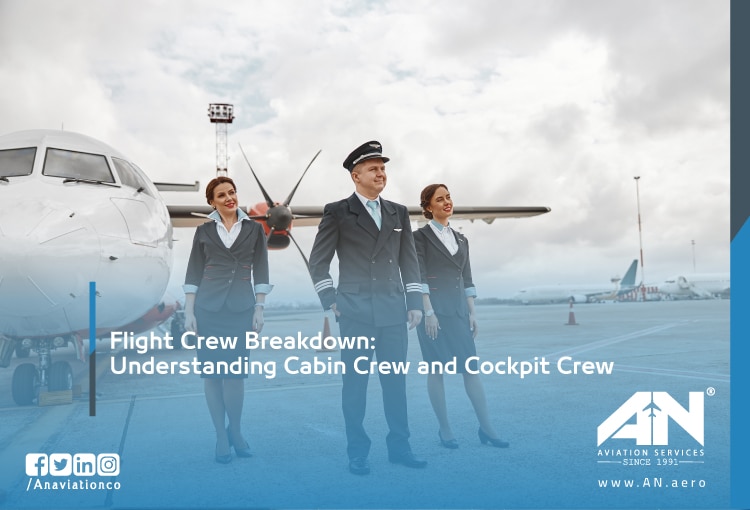
Efficient flight operations depend on a highly trained flight crew, ensuring safety, precision, and seamless coordination from takeoff to landing. Within this crew, responsibilities are divided between the cockpit crew, who operate the aircraft, and the cabin crew, who manage in-flight safety and passenger experience.
For airlines, business jet operators, and aviation professionals, understanding these distinct roles is essential for optimizing crew management, compliance, and overall flight efficiency. This breakdown clarifies the responsibilities, training, and qualifications required for cabin crew and cockpit crew, highlighting their critical contributions to commercial flights and private aviation.
What Is Flight Crew?
The term flight crew refers to everyone responsible for managing and operating a flight. This includes:
- Cockpit Crew (Flight Deck Crew).
- Cabin Crew.
Together, these teams work to make sure each flight is safe, efficient, and stress-free for passengers.
What Is a Cabin Crew?
The cabin crew, better known as flight attendants, are the people you see moving through the cabin, helping passengers and making sure everything inside the plane runs smoothly, and their main goal is to ensure the safety and comfort of every passenger on board.
What are Their Primary Responsibilities?
Cabin crew members do much more than just serve food and drinks. Their job includes:
- Pre-flight safety checks: Making sure emergency equipment is working and everything in the cabin is secure.
- Helping passengers: Assisting with seating, baggage storage, and answering questions.
- Providing customer service: Serving meals, handling special requests, and making sure passengers are comfortable.
- Ensuring passenger safety: Demonstrating safety procedures, securing the cabin for takeoff and landing, and responding to emergencies.
- Handling emergencies: Performing first aid, helping during medical situations, and leading evacuations when needed.
Cabin crew members must stay alert at all times. While they make flights more comfortable, their number one job is passenger safety.
Training and Qualifications:
Becoming a flight attendant isn’t just about looking professional in uniform. It takes serious training and the ability to stay calm under pressure. Here’s what it involves:
- Basic requirements: Most airlines require a high school diploma, fluency in English, and strong communication skills.
- Initial training: Airlines like American Airlines and others offer a training class at special training facilities, covering safety drills, emergency landings, and medical response.
- Successful completion of training: Candidates must pass written tests, physical assessments, and safety demonstrations before they can work on commercial flights.
- Ongoing training: Even after they start working, flight attendants regularly go through refresher courses to stay up to date on safety procedures.
Airlines flight attendant training is intense because flight attendants must be prepared for any situation whether it’s a medical emergency, an unruly passenger, or an emergency landing.
What Is Cockpit Crew?
The cockpit crew, also called the flight deck crew, sits at the front of the aircraft and controls the plane. These are the people responsible for getting you safely from one place to another.
What are Their Primary Responsibilities?
- Planning and executing flights: Reviewing flight routes, checking the weather, and preparing for any possible changes.
- Operating the aircraft: Controlling takeoff, in-flight navigation, and landing.
- Monitoring flight systems: Keeping track of fuel levels, engine performance, and flight data.
- Communicating with air traffic control: Receiving instructions and adjusting flight plans if necessary.
- Handling emergencies: Making quick decisions in case of engine failure, severe weather, or security threats.
Flying a plane is a huge responsibility, and that’s why cockpit crew members go through years of education and training before they can work on commercial flights.
Training and Qualifications:
- Education: Most pilots start with a high school diploma and then attend flight school or earn an aviation-related degree.
- Flight training: Aspiring pilots must log hundreds of hours in the cockpit before earning their commercial pilot license.
- Licenses and certifications: Pilots must pass strict exams to earn their Airline Transport Pilot (ATP) license.
- Simulator training: Before flying a real plane, pilots train in flight simulators to practice handling emergencies.
- Ongoing training: Pilots must regularly complete check rides, simulator tests, and emergency drills.
Key Differences Between Cabin Crew, and Cockpit Crew
Even though cabin crew and cockpit crew work on the same flight, their jobs are very different.
Roles and Responsibilities:
The cabin crew focuses on passenger experience and safety inside the cabin.
The cockpit crew is in charge of flying and operating the aircraft.
Training and Qualifications:
Pilots need years of flight school and licensing.
Flight attendants train for safety, first aid, and customer service.
Interaction with Passengers:
The cabin crew interacts with passengers throughout the flight.
The cockpit crew mainly communicates through announcements and in rare cases, emergencies.
The Role of AN Aviation in Supporting Crew Operations
Flight crews don’t work alone. They rely on support teams on the ground to keep operations running smoothly. That’s where AN Aviation comes in.
Ground Handling Services:
AN Aviation provides essential ground handling support to help flight crews do their jobs efficiently. This includes:
- Helping crew members with pre-flight preparations.
- Managing baggage handling, aircraft refueling, and maintenance checks.
- Assisting VIP and private jet crews with special requests.
Flight Support Services:
AN Aviation also helps cockpit crews with flight operations by offering:
- Overflight and landing permits for international flights.
- Weather forecasting to help pilots plan for safe flying conditions.
- Flight planning assistance to optimize routes and fuel efficiency.
From commercial flights to private jets, AN Aviation works behind the scenes to make sure every flight crew has the support they need. With well-trained flight crews and expert ground support, every journey can be safe, smooth, and stress-free.
FAQ
What is the fundamental difference between Flight Crew and Cabin Crew?
While both work in tandem, “Flight Crew” (or Cockpit Crew) refers specifically to the licensed individuals responsible for the actual operation and navigation of the aircraft—primarily the Captain and the First Officer. “Cabin Crew,” often referred to as flight attendants, are the primary safety officers in the passenger cabin. While they are known for service, their core legal role is the management of cabin safety, evacuations, and onboard medical responses. Together, these two groups form the “Operational Crew.”
How does “Crew Resource Management” (CRM) bridge the gap between the cockpit and the cabin?
CRM is a specialized training philosophy that eliminates the “authority gradient” that once existed in aviation. It encourages open, assertive communication regardless of rank. In a modern setting, this means a junior cabin crew member is trained and empowered to alert the Captain to a safety concern without hesitation. This integrated approach ensures that the eyes and ears in the cabin are a direct extension of the cockpit’s situational awareness.
What are the legal authorities of a Pilot-in-Command (PIC) regarding passenger conduct?
The Pilot-in-Command holds ultimate legal authority over the aircraft, its crew, and its passengers once the cabin doors are closed. Under international aviation law, the PIC has the power to restrain unruly passengers, divert the aircraft to remove a security threat, and even refuse boarding to anyone deemed a safety risk. This authority is not just a company policy; it is a delegated legal power to ensure the safety of the flight.
How has digital technology changed the daily workflow of a modern flight crew?
The “Paperless Cockpit” and “Digital Cabin” are now the industry standard. Cockpit crews use Electronic Flight Bags (EFBs) for real-time weather, performance calculations, and digital charts. Similarly, cabin crews use mobile devices for real-time passenger manifests, reporting cabin defects instantly to maintenance teams, and managing medical emergencies with live data links to ground-based doctors. This digital integration reduces administrative workload, allowing the crew to focus entirely on safety and service.
What is “Duty Time” and how is it regulated to prevent crew fatigue?
Duty time is a strictly regulated window that defines how many hours a crew member can work within a 24-hour period. It includes not just the time in the air, but also pre-flight briefings and post-flight duties. Regulatory bodies have implemented “Fatigue Risk Management Systems” (FRMS) that use data to ensure crews have mandatory rest periods. These rules are designed to ensure that every crew member is at peak mental and physical performance during the most critical phases of flight—takeoff and landing.