

Aviation safety is built on preparation, precision, and clearly defined processes. At the core of this framework are cabin emergency procedures, structured actions designed to protect passengers and crew during unexpected events.
While aviation remains one of the safest modes of transportation, preparedness is essential. A well-executed cabin emergency procedure can significantly reduce injuries, prevent panic, and ensure efficient evacuation when necessary.
In Egypt’s expanding aviation sector across commercial airlines, charter services, and private jet operations, safety awareness is not only about regulatory compliance. It is an operational responsibility.
Why Knowing This Matters for Everyone Onboard?
Cabin emergency procedures are not solely the responsibility of flight attendants or pilots. Passengers also play a critical role in ensuring a safe outcome.
Clear procedures save lives when seconds count.
Understanding what to expect during an emergency reduces panic and supports coordinated action. In high-stress environments, individuals may react impulsively. Structured commands and standardized responses are designed to replace confusion with clarity.
For aviation operators, reinforcing awareness of cabin emergency procedures strengthens overall safety culture and aligns with international best practices.
The Universal Commands: What You Hear and What You Must Do?
During an emergency, communication becomes direct, repetitive, and authoritative. This is intentional and essential.
“Brace! Brace! Brace!”
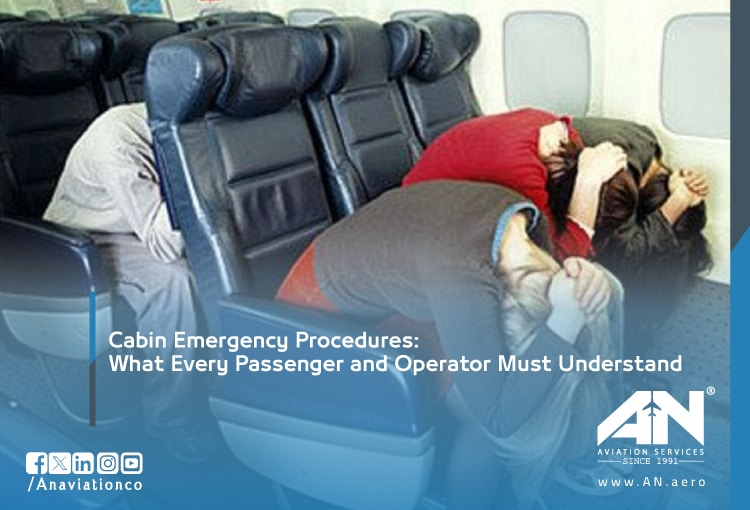
This command indicates that impact is imminent. Immediate compliance is critical.
The correct brace position typically involves:
- Head down
- Hands placed behind the head
- Elbows positioned inward
- Feet flat on the floor
This position is designed to protect the spine, reduce head movement, and shield vital organs during impact. Biomechanical research supports this posture as the most effective way to minimize injury.
Passengers should assume the brace position immediately upon command and remain in position until further instruction.
“Leave Everything! Evacuate!”
During evacuation, personal belongings must be left behind without exception. Attempting to retrieve carry-on items:
- Obstructs aisles
- Delays evacuation
- Risks of damaging evacuation slides
- Endangers other passengers
In emergency scenarios, seconds are critical. A proper cabin emergency procedure prioritizes immediate evacuation and unobstructed exit access. Personal items are replaceable; human life is not.
Pinpoint Reactions & Correct Action Plans
Understanding instinctive reactions and correcting them is essential.
1- For Passengers
Scenario: A loud bang is heard, and cabin lights flicker. The instinct may be to stand up and assess the situation.
Correct Action:
Remain seated and follow crew instructions immediately.
If oxygen masks deploy:
- Pull the mask toward you to activate oxygen flow
- Secure it over your nose and mouth
- Breathe normally
- Put your own mask on first before assisting others
Passengers should not stand or move unless instructed to evacuate. Crew members are trained to assess and direct the response.
2- For Flight Attendants / Cabin Crew
Scenario: A sudden decompression occurs, and passengers are disoriented.
Correct Action:
Secure yourself first. Then communicate.
Immediately don the nearest oxygen mask. Once protected, provide clear visual and verbal guidance to passengers.
Crew functionality is essential. A crew member who is incapacitated cannot effectively manage a cabin emergency procedure.
3- For Private Jet Operators and Owners
Private aviation environments often involve fewer crew members. This increases the importance of passenger preparedness.
Correct Action:
Conduct a comprehensive pre-flight safety briefing for every departure.
Do not assume familiarity with aircraft-specific configurations. Each aircraft differs in:
Ensuring passengers understand the cabin emergency procedure for that specific aircraft enhances overall safety.
Key Emergency Scenarios and the Correct Response
Rapid Decompression: Oxygen Masks Deploy
In the event of rapid decompression, passengers may experience:
- Ear pressure changes
- Sudden cooling
- Temporary cabin fog
These effects are normal.
Passengers should immediately pull the oxygen mask toward them, secure it properly, and breathe normally. Oxygen systems are designed to supply sufficient oxygen during the aircraft’s descent to a safe altitude.
Remaining seated and calm is essential.
Fire or Smoke in the Cabin
Smoke inhalation presents a significant risk during onboard incidents.
Appropriate response includes:
- Staying low, where the air is cleaner and cooler
- Covering the nose and mouth with clothing if necessary
- Following crew instructions without delay
If directed to assess an exit:
- Feel the door before opening it
- A hot surface may indicate fire on the opposite side
Cabin emergency procedures prioritize rapid containment and evacuation in fire-related incidents due to the speed at which such situations can escalate.
Emergency Landing: Land vs. Water (Ditching)
Procedures vary depending on the environment.
Landing on Land:
- Assume the brace position
- Follow evacuation commands
- Move away from the aircraft immediately once outside
Water Landing (Ditching):
- Put on the life jacket when instructed
- Do not inflate it inside the aircraft
- Inflate only after exiting
Inflating a life jacket inside the cabin can obstruct movement and delay evacuation.
What Crew Train For: The Science Behind the Procedures
Cabin emergency procedures are grounded in rigorous testing, simulation, and regulatory standards.
1. The 90-Second Rule
Aircraft certification requires full evacuation capability within 90 seconds using only half of the available exits.
This requirement influences:
- Cabin layout design
- Exit accessibility
- Slide deployment systems
- Crew positioning and command protocols
Speed and coordination are engineered into aviation safety systems.
2. Exit Selection and Slide Management
Crew members are trained to:
- Assess external hazards before opening exits
- Block unsafe exits
- Redirect passenger flow efficiently
- Control evacuation slide usage
These decisions are made within seconds and are based on structured training and real-world simulations.
What You Can Do to Be Prepared?
Preparedness requires minimal effort but delivers significant impact.
For Passengers: A 2-Minute Pre-Flight Safety Review
Before takeoff:
- Count the Rows: Identify the number of rows to the nearest exit in both directions. Visibility may be limited during an emergency.
- Review the Safety Card: Each aircraft type has unique configurations. Familiarize yourself with the specific cabin emergency procedure outlined in the safety card.
- Listen to the Safety Briefing: Even frequent travelers benefit from reviewing safety instructions on every flight.
For Operators: Strengthening Safety Culture
For commercial airlines, charter operators, and private jet companies operating:
- Invest in recurrent, high-quality simulator training for cabin crew
- Conduct regular decompression and fire-response drills
- Ensure all safety equipment is inspected and maintained according to regulatory standards
- Standardize cabin emergency procedure documentation
- Enforce mandatory passenger safety briefings
A strong safety culture is proactive, measurable, and continuous.
Cabin emergency procedures are structured, evidence-based systems designed to protect lives under extraordinary circumstances.
Whether you are a passenger, cabin crew member, or aviation operator, understanding and respecting a cabin emergency procedure enhances collective safety.
Preparation is often invisible during routine operations. However, in critical moments, it becomes the defining factor between disorder and controlled response.
FAQs
Cabin Emergency Procedures: What Every Passenger and Operator Must Understand
If oxygen masks deploy, pull the mask firmly toward you to activate oxygen flow. Place it over your nose and mouth, secure the elastic band, and breathe normally. Always put your own mask on first before assisting others.
What is the brace position and why do we use it?
The brace position involves leaning forward with your head down and hands positioned behind your head. It is used to reduce movement during impact and protect the head, spine, and vital organs during an emergency landing.
Which exit should I use in an emergency evacuation?
Use the nearest safe exit, which may not be the one you boarded through. Follow crew instructions at all times, as they will assess external hazards and direct passengers to the safest available exit.
Are life vests under every airplane seat?
On most commercial aircraft operating over water, life vests are located under or near each passenger seat. However, configurations vary by aircraft type and operator, which is why reviewing the safety card before departure is important.
Can a plane door be opened during a flight?
No. Aircraft cabin doors are pressurized and cannot be opened during flight due to the difference in air pressure between the cabin and the outside environment.
What should I do if there is a fire on a plane?
Remain calm and follow crew instructions immediately. Stay low to avoid smoke inhalation, cover your nose and mouth with clothing if necessary, and move toward the nearest safe exit when directed.
How often do flight attendants practice emergencies?
Cabin crew undergo recurrent emergency training at regular intervals, including simulated evacuations, fire response drills, and decompression scenarios, in accordance with aviation authority regulations.