

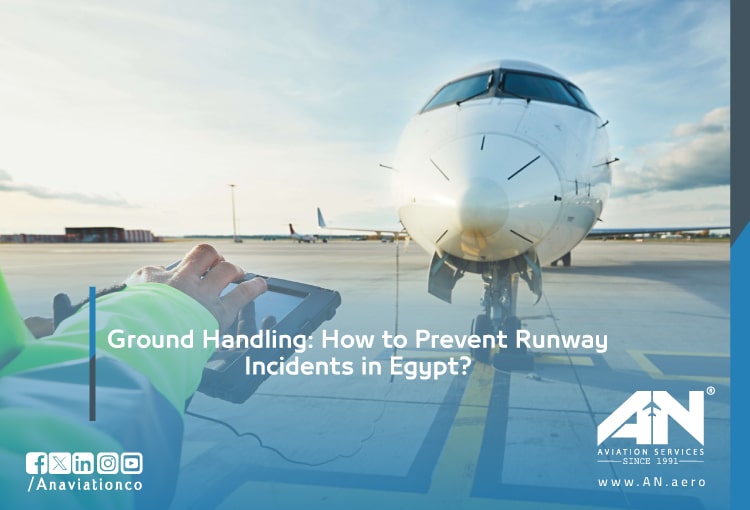
At an airport, safety does not begin when an aircraft reaches the runway. It begins much earlier on the ramp, where aircraft, ground support equipment, vehicles, and personnel operate within a tightly controlled environment.
A runway incident can involve the unauthorized presence of an aircraft, vehicle, or person in an area designated for aircraft landing or takeoff. Runway safety is therefore not only the responsibility of pilots and air traffic controllers. Ground handling teams are also a critical line of defense, helping coordinate aircraft movements, control vehicles and equipment, maintain situational awareness, and identify hazards before they become incidents.
This role is particularly important as airport operations become increasingly complex. IATA describes ramps as busy, confined environments where aircraft, ground support equipment (GSE), and people are constantly moving.
For airports and aviation operators in Egypt, effective ground handling is an essential part of maintaining safe, efficient, and reliable operations.
What Exactly Is a Runway Incident and Why Should You Care?
The term runway incident can refer to several different types of aviation safety events. Two of the most important are runway incursions and runway excursions.
1- Runway Incursion
A runway incursion is the incorrect presence of an aircraft, vehicle, or person on the protected area of a surface designated for aircraft landing and takeoff.
This means an incursion does not necessarily require a collision. A vehicle entering a runway without authorization, for example, can constitute a runway incursion even if the aircraft and vehicle never come into contact.
The risk is significant because an aircraft may be accelerating for takeoff or approaching to land with very little time available for corrective action.
2- Runway Excursion
A runway excursion occurs when an aircraft unintentionally leaves the runway during takeoff or landing, either by overrunning the runway or veering off its side. ICAO identifies runway excursions as a significant global aviation safety risk, while IATA notes that they remain the most common type of accident reported annually.
Although ground handling teams do not control every factor behind an excursion, their work can contribute to overall runway safety by maintaining safe operating areas, removing hazards, supporting aircraft turnaround procedures, and communicating effectively with other airport stakeholders.
The Operational Impact of Runway Incidents
The consequences can extend far beyond the immediate safety event. Depending on the severity, runway incidents can result in:
- Aircraft damage
- Passenger or personnel injuries
- Flight delays and cancellations
- Operational disruption
- Regulatory consequences
- Increased investigation and recovery costs
- Reputational damage for airlines and airport operators
That is why preventing runway incidents requires a coordinated safety system in which every operational team understands its responsibilities.
How Ground Handling Teams Are the Frontline of Runway Safety?
Ground handling takes place in one of the most operationally demanding areas of an airport. Aircraft, baggage vehicles, fuel trucks, catering vehicles, maintenance teams, passengers, and GSE may all operate in close proximity.
A small communication error or an improperly positioned vehicle can create a serious safety risk.
Effective ground handling therefore plays a vital role in preventing incidents through several key activities.
Aircraft Marshalling and Visual Docking
Aircraft marshalling provides pilots with standardized visual guidance while aircraft are moving into or out of parking positions.
Trained ground personnel use established signals and procedures to guide aircraft safely, while visual docking systems can provide additional positional information. IATA specifically provides standardized training covering aircraft marshalling, ramp hand signals, and the safe operation of GSE around aircraft.
Proper marshalling helps reduce the risk of:
- Aircraft-to-aircraft collisions
- Aircraft-to-GSE contact
- Damage to airport infrastructure
- Unsafe positioning of equipment around aircraft
This makes trained personnel and consistent procedures essential components of safe ground operations.
Apron Safety and Vehicle Management
The apron is a highly active area where aircraft and ground vehicles operate simultaneously. Establishing clear movement procedures and maintaining separation between aircraft and vehicles is therefore critical.
Ground handling teams may coordinate the movement of:
- Fuel trucks
- Baggage carts
- Catering vehicles
- Passenger buses
- Pushback tractors
- Maintenance vehicles
- Other ground support equipment
Vehicles operating near aircraft or maneuvering areas should follow airport-specific procedures, use appropriate communications equipment where required, and be operated by personnel who have received the necessary training and authorization.
A fundamental principle is simple: aircraft always require priority and adequate separation must be maintained.
Standardized procedures are a major part of this approach. IATA emphasizes that consistent application of global ground-operation standards is fundamental to safe and efficient ground handling.
Communication and Coordination With ATC
Communication is one of the most important safeguards against runway incidents.
Ground operations frequently involve coordination between flight crews, ground handling personnel, vehicle operators, and air traffic control. During pushback, startup, taxi, and other aircraft movements, everyone involved needs a clear understanding of what is happening and what has been authorized.
Poor or ambiguous communication can increase the risk of an aircraft or vehicle entering a protected area at the wrong time. IATA has highlighted communication issues including misunderstanding of instructions and frequency congestion as factors that can contribute to runway and taxiway incursions.
Effective ground handling therefore depends on:
- Clear communication procedures
- Standardized phraseology where applicable
- Positive confirmation of critical instructions
- Proper radio discipline
- Clear coordination between operational teams
- Strong situational awareness
Communication should never be treated as an administrative task. On an active airport surface, it is a safety control.
Runway Inspections and Foreign Object Debris (FOD) Removal
Foreign Object Debris, commonly known as FOD, can create serious hazards for aircraft.
Loose objects such as metal fragments, stones, equipment parts, packaging materials, or other debris can damage aircraft components, tires, engines, or other systems.
Effective FOD management involves more than simply removing visible debris. It requires a proactive system of inspection, reporting, removal, and prevention.
Ground operations personnel can support FOD prevention by:
- Inspecting operational areas
- Removing debris promptly
- Securing equipment and materials
- Keeping work areas organized
- Reporting hazards immediately
- Monitoring areas where FOD is more likely to accumulate
IATA safety guidance specifically recommends regular inspections and removal of FOD from runways, taxiways, and aprons, alongside stronger communication between flight crews, ATC personnel, and vehicle drivers.
For Egyptian airports, these procedures should always be carried out in accordance with the applicable airport operating procedures and regulatory requirements.
Emergency Response and Fuel Spill Management
Not every ramp hazard can be prevented. When something does go wrong, the speed and quality of the response can make a significant difference.
Ground handling teams may be among the first personnel to identify situations such as:
- Fuel leaks
- Equipment failures
- Aircraft damage
- Fires or smoke
- Spills
- Unsafe equipment positioning
- Other abnormal ramp conditions
Personnel must know how to recognize hazards, communicate them through the appropriate channels, and follow established emergency procedures.
This is why ground-handling training should extend beyond routine turnaround activities. Personnel need to understand what to do when normal operations suddenly change.
Runway Safety Is Not Optional; It Is Operational
Runway safety is not a single procedure performed by one department. It is a system that depends on multiple stakeholders working together.
Pilots, air traffic controllers, airport operators, airlines, ground handlers, vehicle drivers, maintenance teams, and safety personnel all have roles to play.
The Egyptian Civil Aviation Authority maintains specific regulatory and advisory material addressing aerodrome operations and runway safety, including guidance on prevention of runway incursions, runway safety teams, aerodrome safety competency, and safety management.
The regulatory framework is also updated over time. Current Egyptian Civil Aviation Authority publications include Part 139: Certification and Operations of Land Aerodromes and other safety-related requirements and guidance.
For operators, this means runway safety cannot be separated from everyday operational performance.
A safe turnaround is not simply one in which an aircraft departs on time. It is one in which the aircraft, passengers, crew, personnel, vehicles, and equipment are managed safely throughout the entire ground operation.
How AN Aviation Services Enhances Runway Safety in Egypt?
For aviation operators, selecting the best ground-handling partner is an important part of managing operational risk.
AN Aviation Services supports safe and efficient ground operations by placing trained personnel, structured procedures, communication, and proactive safety practices at the center of its approach.
1- Trained and Certified Ground Handling Staff: Ground operations require personnel who understand aircraft handling procedures, ramp safety, equipment operation, communication protocols, and emergency procedures. Training helps employees recognize hazards before they develop into incidents and respond appropriately when unexpected situations occur.
2- Real-Time Communication and Coordination: Safe ground operations depend on effective coordination between the different teams operating around an aircraft. AN Aviation Services focuses on clear operational communication and coordination to help ensure that aircraft movements, vehicle movements, turnaround activities, and other ground services are carried out in an organized and controlled manner.
3- Proactive FOD Prevention and Runway Monitoring: Preventing runway incidents requires identifying hazards before they affect aircraft operations. FOD awareness, inspections, proper equipment management, and prompt reporting of hazards are all important elements of a proactive safety culture. By integrating safety into daily ground handling operations, AN Aviation Services helps aviation operators in Egypt maintain greater control over the risks associated with busy airport environments.
Safer Ground Operations Start Before Takeoff
Runway safety does not begin when an aircraft lines up for departure. It begins much earlier with disciplined ground operations, effective communication, trained personnel, controlled vehicle movements, proactive FOD management, and a clear understanding of everyone’s responsibilities.
As airport operations in Egypt continue to demand safe and efficient turnarounds, professional ground handling becomes increasingly important to preventing runway incidents and protecting passengers, aircraft, personnel, and airport operations.
With the right people, procedures, training, and safety culture in place, the ramp does not have to be a danger zone. It can be the first layer of protection in a safe and successful flight operation.
AN Aviation Services is committed to supporting safe, reliable, and efficient ground operations across Egypt.