

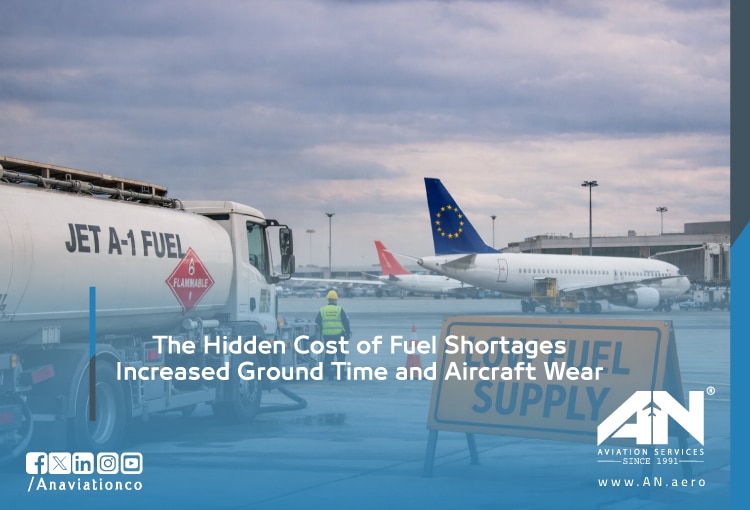
Fuel shortages cost airlines far more than the price on the fuel invoice. When jet fuel is scarce, aircraft spend longer on the ground, fly longer routes, and wear out faster. Those hidden costs arrive weeks or months later as maintenance bills, crew overtime, and lost capacity.
For most of aviation history, fuel was a planning input: expensive and volatile, but available. In 2026, that assumption broke. The Iran war and the disruption of shipping through the Strait of Hormuz turned jet fuel supply into an operational risk of its own.
For operators flying in and through Egypt and Africa, understanding the full cost of fuel shortages is now part of basic flight planning. Here is where those costs hide, and how AN Aviation Services helps operators reduce them.
The Reality of Fuel Shortages in 2026
Jet fuel prices have climbed to levels few operators planned for. IATA now expects jet fuel to average $152 per barrel in 2026, almost 70% higher than in 2025.
High fuel prices were only part of the story. Physical shortages followed, and airlines began canceling flights and cutting schedules. Aviation analytics firm Cirium reported that airlines removed about 13,000 flights from May schedules alone, just ahead of the summer travel peak.
Africa is especially exposed. Much of the continent’s jet fuel is imported, and a large share of it passes through the Strait of Hormuz. When supply there is disrupted, African airports feel it quickly, and African operators already pay more for fuel than most of the world.
How Fuel Shortages Drive Up Ground Time?
Waiting for Fuel: The New Normal on the Ramp
When jet fuel supply tightens, fuel does not only get more expensive. It gets slower. Deliveries to airports are delayed, available stock is allocated between airlines, and rerouted shipments take longer to arrive.
The result is more ground time. Aircraft wait for fuel trucks, for allocations to be confirmed, or for a supplier to release stock.
Cape Town shows how quickly this can happen. In 2022, delayed fuel deliveries forced rationing at Cape Town International Airport. Some carriers received only part of their normal allocation, and United Airlines canceled flights because it could not fuel its aircraft. In late 2025, the airport faced another warning of severe jet fuel supply disruption.
The Cost of Extended Ground Time
Every extra minute on the ground has a price:
- APU Fuel Burn: With the engines off, the auxiliary power unit often keeps running to power the cabin and aircraft systems. Longer ground time means burning scarce, expensive fuel without going anywhere.
- Crew Duty Time: Ground delays eat into crew duty limits. A long wait can force a crew change or an unplanned overnight stay, adding hotel and staffing costs.
- Missed Slots: At congested airports, a late departure can mean a missed takeoff slot, further delays, and passenger rebooking costs.
Where ground power units are available, switching from the APU to ground power is one of the simplest ways to cut fuel burn during long turnarounds.
How Rerouting and Longer Flights Accelerate Aircraft Wear?
The Rerouting Reality
With much of the central Middle East airspace closed or restricted, flights between Europe and Asia are routing north via the Caucasus or south via Egypt, Saudi Arabia, and Oman.
According to Aviation Maintenance Magazine, these diversions typically add 90 to 120 minutes per flight. More time in the air means more fuel burned and more hours on every engine.
Egypt sits on the southern corridor. That makes it a key point for technical stops, refueling, and crew changes on these longer routes.
Accelerated Engine Wear
Longer flights do not just cost fuel. They also shorten the life of engines and components.
- Thermal Stress: Sustained high loads over longer sectors increase thermal stress, speeding up wear on high-pressure turbine blades, combustors, and other hot section parts.
- EGT Margin Deterioration: Longer routes and more flight hours erode Exhaust Gas Temperature (EGT) margin faster. In some cases, this brings performance restoration shop visits forward by several months.
- Sand and Dust Exposure: Rerouted flights often pass over hot, high-particulate regions such as Saudi Arabia and parts of Turkey. More sand and dust ingestion leads to faster turbine blade erosion and cooling hole blockage, reducing efficiency and component life.
The Maintenance Cost Reality
Airlines entered this crisis already under pressure. IATA estimated that supply chain problems would cost the industry more than $11 billion in 2025, much of it in excess fuel and additional maintenance costs.
With new aircraft deliveries delayed, airlines are keeping older aircraft flying for longer. Older aircraft burn more fuel and need more maintenance, so rising fuel prices hit them twice.
The Operational Cascade: How Fuel Shortages Create a Vicious Cycle?
- The “Fly Harder” Problem: When some aircraft are grounded by fuel shortages, parts delays, or engine shortages, the rest of the fleet has to work harder to protect the schedule. Higher utilization means more flight hours, more cycles, and earlier maintenance events. That builds a maintenance backlog, which takes even more aircraft out of service. The number of flights an operator can reliably offer keeps shrinking.
- The Deferred Maintenance Trap: To protect cash, many operators are extending time on wing and pushing non-critical shop visits back. It looks like a saving. But when fuel is expensive, even a small drop in engine efficiency means a large increase in fuel burn. Deferred maintenance can erase its own savings within months.
- Parts and Supply Chain Delays: The conflict has also slowed the movement of spare parts. With air cargo capacity reduced and shipping routes disrupted, parts take longer to arrive and aircraft wait longer to return to service. Kenya Airways shows what this means for an African carrier. Three of its Boeing 787-8 aircraft were grounded in 2025 due to global supply chain constraints and limited engine availability, cutting both capacity and revenue.
How AN Aviation Services Helps You Navigate Fuel Shortages?
You cannot control oil prices or global jet fuel supply. You can control how prepared your operation is. AN Aviation Services supports operators across Egypt, Africa, and the Middle East with 24/7 fuel, ground handling, and flight support.
1- Real-Time Fuel Availability Intelligence: Our 24/7 operations team tracks fuel availability, NOTAMs, and supply updates at airports along your route. You know before departure where fuel is available and where it is limited, so you can plan tankering or technical stops in advance.
2- Pre-Vetted Fuel Supplier Network: Through our aviation fuel service, we coordinate uplift with established suppliers and arrange fuel before your aircraft arrives. Our ground handling teams then fit fueling into the wider turnaround plan, reducing time spent waiting on the ramp.
3- Maintenance-Aware Flight Planning: Our flight planning balances route length, fuel availability, and airspace restrictions. Fewer unnecessary detours mean fewer engine hours, less exposure to dust-heavy regions where alternatives exist, and less wear over time. Fuel shortages will not disappear overnight. With the right support on the ground and in planning, their hidden costs can be controlled. Contact AN Aviation Services to plan your next flight through Egypt.