

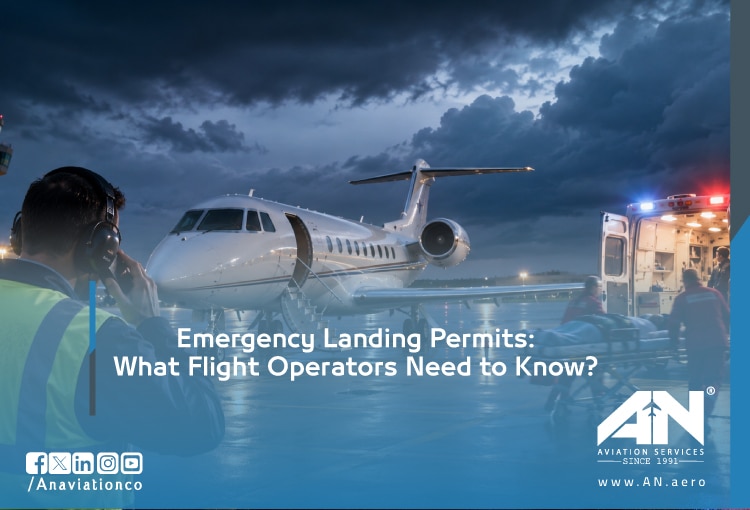
An aviation emergency can develop in minutes. A mechanical failure, medical crisis, severe weather, or sudden security issue can force an aircraft to divert from its planned destination with little warning.
When this happens, flight operators need more than a new airport to land at. They may need immediate coordination with aviation authorities, airport operators, ground handlers, medical teams, immigration, customs, and other local parties.
Across Middle and Southern Africa, requirements can vary significantly between countries and airports. Having reliable emergency landing support can help operators coordinate the necessary arrangements quickly while focusing on the safety of passengers, crew, and aircraft.
What Is an Emergency Landing Situation?
An emergency landing may be required when continuing to the original destination is no longer safe or possible. Common situations include:
- Mechanical or technical failures
- Medical emergencies requiring urgent hospital care
- Severe weather at the planned destination
- Security threats, conflict, or airspace restrictions
- Other critical situations requiring an unexpected diversion
A genuine aircraft emergency is not simply a faster version of a routine landing permit request. The required response depends on the emergency, destination country, airport, and authorities involved.
Why Are Emergency Landing Permits Different From Regular Permits?
Routine international flights usually allow time to arrange landing permits, ground handling, airport slots, customs, and immigration in advance.
Emergencies provide little or no preparation time. Operators may suddenly need to coordinate:
- Aviation and airport authorities
- Emergency authorization where applicable
- Ground handling and fuel
- Customs and immigration
- Medical transport
- Crew and passenger assistance
Requirements vary across Africa, making fast communication and local operational knowledge essential.
5 Emergency Landing Challenges—and What to Do
1. Your Aircraft Has a Mechanical Failure Over Africa
An engine warning, hydraulic problem, pressurization issue, or other technical failure may require an immediate diversion.
There may be no time to research handlers, airport capabilities, or local contacts after the problem begins.
What to do: Have a 24/7 aviation support contact ready before departure.
A regional support partner can begin coordinating the ground requirements while the flight crew manages the operational situation.
2. A Medical Emergency Requires Immediate Hospital Access
Medical emergencies create a different type of urgency.
A passenger may require treatment that cannot wait until the planned destination. Air ambulance and medical flights may also need urgent cross-border coordination to transfer patients between medical facilities.
What to do: Clearly communicate the medical nature and urgency of the situation.
Provide available medical information, destination requirements, patient details where appropriate, and any supporting documentation requested by authorities. Clear communication can help the parties involved understand the priority of the operation.
3. You Divert to a Country Where You Have No Local Handler
An unexpected diversion may take an aircraft far outside its normal operating network.
Once the aircraft lands, it could require parking, stairs, passenger transport, fuel, catering, customs support, immigration assistance, accommodation, maintenance coordination, or other services.
What to do: Work with an aviation support provider with a strong regional network.
One point of coordination can simplify communication between the operator, airport, handler, and relevant authorities.
4. The Emergency Happens at Night or on a Weekend
Emergencies do not follow office hours.
Finding the correct authority, duty officer, airport representative, or handler can become more difficult during nights, weekends, and public holidays.
What to do: Choose an emergency landing support partner with 24/7 operational availability.
The ability to start coordinating immediately can be especially valuable when routine administrative contacts are unavailable.
5. Your Documents Are Not Ready
Even during urgent operations, authorities and service providers may need aircraft, operator, crew, passenger, medical, or flight information depending on the circumstances.
Searching for documents during an emergency wastes valuable time.
What to do: Keep essential aircraft documentation organized and easily accessible before every operation.
Operators that regularly fly across Africa can also provide frequently required documentation to their aviation support partner in advance, allowing the coordination process to begin with fewer avoidable delays.
What Counts as an Aviation Emergency?
Medical Emergencies: These include urgent passenger treatment, air ambulance operations, cross-border patient transfers, and medical repatriation. Medical diversions may require coordination with hospitals, ambulances, customs, immigration, and ground handlers.
Technical Emergencies: Engine problems, hydraulic failures, pressurization issues, fire indications, or critical fuel situations may require an immediate diversion to a suitable airport.
Weather-Related Emergencies: Severe storms, poor visibility, strong winds, volcanic ash, or cyclones can make the planned destination unsafe and force an aircraft to divert.
Security Emergencies: Conflict, airspace closures, political instability, security threats, or evacuation requirements can also result in unexpected diversions and additional authority coordination.
How Does the Emergency Landing Permit Process Work?
Step 1: Identify the Emergency: Communicate the emergency type, aircraft details, current position, intended diversion airport, and estimated arrival time.
Step 2: Contact AN Aviation: Contact AN Aviation’s 24/7 operations team so coordination can begin as early as possible.
Step 3: Provide Available Documents: Depending on the situation, documents may include aircraft registration, airworthiness certificates, insurance, operator information, crew and passenger details, routing, and medical documentation where applicable.
Step 4: Coordinate With Relevant Authorities: AN Aviation can support communication with the relevant aviation authorities, airports, ground handlers, customs, immigration, and other required parties.
Step 5: Confirm Ground Arrangements: Necessary services may include ground handling, parking, fuel, medical transport, customs and immigration, passenger transportation, accommodation, or maintenance support.
Emergency Landing Requirements Across Africa
Emergency procedures and landing permit requirements vary by country, airport, flight type, and circumstances.
South Africa
Planned foreign commercial operations are subject to South African aviation requirements and applicable authorizations. In a genuine emergency diversion, operators should immediately communicate the situation and coordinate with the relevant aviation and airport authorities.
Botswana, Namibia, Zambia, and Zimbabwe
These countries have their own aviation and permit procedures. Emergency coordination may involve aviation authorities, airports, handlers, customs, immigration, and medical services.
Airport capabilities should also be considered, particularly when diverting to smaller or remote airports.
Angola and the Democratic Republic of the Congo
Operations may require additional coordination depending on the airport, security environment, route, and flight purpose. Flights near sensitive or conflict-affected areas can involve further authority or security requirements.
Important: There is no universal emergency permit processing time across Africa. Operators should always confirm current requirements with the relevant authority or an experienced aviation support provider.
How AN Aviation Supports Emergency Landing Operations?
AN Aviation provides emergency landing support across Middle and Southern Africa, helping operators coordinate urgent operational requirements.
Support may include:
- 24/7 operational assistance
- Emergency landing permit and authorization support where applicable
- Coordination with aviation and airport authorities
- Ground handling and aircraft fueling
- Customs and immigration assistance
- Medical and air ambulance ground support
- Crew and passenger transportation
- Accommodation and other turnaround services
Having one regional point of coordination can help operators manage multiple requirements during a time-sensitive diversion.
Prepare Before an Emergency Happens
You cannot predict when an emergency will occur, but you can prepare for it.
Keep aircraft documents current, maintain 24/7 emergency contacts, identify suitable diversion airports, and work with a regional aviation support partner before an urgent situation develops.
Need Emergency Landing Support in Africa?
When an aircraft needs to divert unexpectedly, there may be no time to search for local handlers, understand unfamiliar procedures, and contact multiple authorities separately.
AN Aviation provides emergency landing support and aviation coordination across Middle and Southern Africa, helping flight operators manage urgent landing requirements, ground handling, fueling, medical transportation, and other operational needs.
Whether the situation involves a medical emergency, technical problem, severe weather, or an unexpected security disruption, having experienced regional support available can help you respond faster and keep the operation moving.
Contact AN Aviation for 24/7 emergency aviation support across Middle and Southern Africa.