

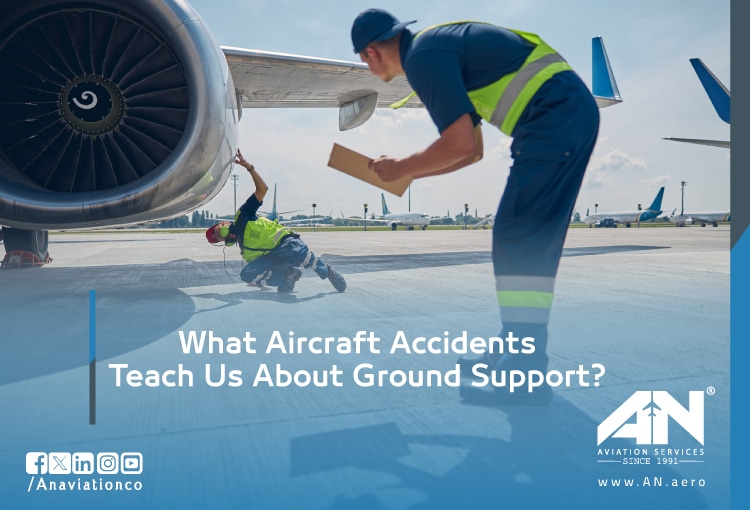
While aviation safety has improved significantly over the past few decades, accident investigations continue to reveal a common theme: many safety risks originate on the ground. A single oversight during aircraft preparation can create a chain of events that affects the entire flight. Whether it is an incorrectly loaded cargo container, a fueling discrepancy or damage caused by ground equipment, seemingly minor mistakes can have major operational consequences.
Understanding the connection between aircraft accidents and ground support helps airlines, airports and service providers identify risks early and strengthen safety measures before an aircraft ever leaves the runway.
Why Ground Handling Is Called the “Forgotten Piece” of Aviation Safety?
Compared to flight crews and aircraft manufacturers, ground handling professionals often work behind the scenes. Yet they directly influence aircraft readiness and operational safety every day.
Historically, aviation safety discussions focused heavily on what happens in the air. As a result, ground operations received less regulatory attention despite their critical role.
Today, the industry increasingly recognizes that effective ground support is not simply an operational requirement it is a key safety function that directly impacts flight performance and risk management.
How Ground Handling Impacts Flight Safety?
Every stage of ground handling can influence aircraft performance, making accuracy and compliance essential for safe operations.
Baggage and Cargo Loading Errors
Proper weight and balance calculations are essential for safe aircraft performance. Incorrect baggage or cargo loading can affect an aircraft’s center of gravity, impacting take-off, climb and landing characteristics.
Ground handling teams must follow precise loading procedures to ensure cargo is distributed correctly and secured throughout the flight.
Aircraft Fueling Mistakes
Fueling errors remain one of the most significant risks during aircraft preparation.
Potential issues include:
- Incorrect fuel quantity
- Fuel contamination
- Wrong fuel type
- Communication breakdowns between fueling crews and flight operations
Even small fueling mistakes can create serious operational and safety concerns.
De-Icing and Anti-Icing Failures
In regions experiencing cold weather, proper de-icing and anti-icing procedures are critical.
Failure to remove ice, frost or snow can negatively affect aircraft aerodynamics, reducing lift and increasing the risk of performance issues during take-off.
Ground support teams must follow strict procedures to ensure aircraft surfaces remain clear and compliant with safety standards.
Ramp Vehicle and Equipment Operations
Aircraft are frequently surrounded by support vehicles and equipment during turnaround operations.
These include:
- Baggage loaders
- Pushback tractors
- Fuel trucks
- Catering vehicles
- Passenger stairs
- Ground power units
Improper vehicle operation can result in aircraft damage, injuries and costly delays. Ramp safety procedures are therefore a major component of airport ground support operations.
The Regulatory Gap That Existed for Decades
For many years, aviation regulations focused heavily on flight operations while ground handling standards varied significantly between airports and service providers.
This lack of standardization created inconsistencies in training, procedures and safety oversight across the industry.
As air traffic volumes increased, the aviation sector recognized the need for a more unified approach to ground operations safety.
Why Standardization Matters?
Standardized procedures create consistency across airports, airlines and service providers.
Benefits include:
- Reduced operational errors
- Improved communication
- Better safety performance
- Enhanced staff training
- Greater accountability
By establishing common safety standards, the industry can minimize risks and improve overall operational efficiency.
The Numbers That Prove the Problem
Industry data and incident reports highlight the significant impact ground handling errors can have on safety and operations.
Global Ground Damage Statistics
Ground damage incidents occur far more frequently than many people realize. Aircraft regularly sustain damage while parked at gates, during pushback operations or while being serviced on the ramp.
Many of these incidents are preventable and are linked to procedural failures, equipment misuse or communication breakdowns.
Although most ground incidents do not result in injuries, they generate significant repair costs, operational disruptions and safety concerns for airlines worldwide.
Ground handling incidents represent many of total aviation safety events:
- Frequency: The aviation industry experiences thousands of ground damage events annually. The Flight Safety Foundation estimated that 27,000 ramp accidents and incidents occur worldwide every year—approximately one for every 1,000 departures.
- Severity distribution: A significant portion of ground damage events—estimated at 15-20%—involve damage to critical aircraft components such as engines, flight control surfaces, or fuselage structures that could affect airworthiness.
- Undetected damage risk: Perhaps most alarming is the subset of ground damage events that go unreported or undetected. A baggage loader might strike an aircraft door seal hard enough to compromise its integrity, but if the damage isn’t visible from the ground and goes unreported, the aircraft may pressurize at altitude with a compromised seal—creating a potential explosive decompression risk.
- Engine damage: Jet engine damage from ground service equipment, foreign object debris, or improper maintenance covers represents a particularly costly category. Engine replacement or major overhaul can cost millions of dollars and remove an aircraft from service for weeks.
- Personnel injuries: IATA data shows the most frequently reported ground handling injuries are slips, trips and falls, struck against objects, lift/carry incidents, push/pull injuries, and falls from heights—with falls from heights being the most severe category despite lower frequency.
The Insurance Reality
Aircraft ground damage represents a substantial financial burden for airlines, airports and service providers.
Repair costs can range from minor cosmetic fixes to major structural repairs that take aircraft out of service for extended periods.
Beyond repair expenses, organizations may face:
- Schedule disruptions
- Passenger compensation costs
- Operational delays
- Insurance premium increases
- Reputational damage
The financial dimension of ground handling safety cannot be overstated. Insurance underwriters have taken keen notice of ground handling risk, and the economics tell a compelling story:
- Premium costs: Ground handling liability insurance represents a substantial and growing expense for airlines, airports, and ground service providers. As claim frequency and severity have increased, premiums have risen accordingly.
- Claim severity: Ground damage claims involving modern commercial aircraft can reach staggering amounts. A single incident involving damage to a wide-body aircraft’s structure or engines can generate claims in the tens of millions of dollars. When business interruption and passenger compensation are included, total costs escalate further.
- Deductible trends: Insurance market hardening has pushed deductibles higher, meaning that airlines and ground handlers retain more risk than ever before. A ground handling company operating on thin margins may face existential financial risk from a single serious incident.
- Coverage restrictions: Insurers increasingly impose coverage restrictions or exclusions for ground handling operations that don’t meet recognized safety standards. ISAGO registration, for example, is becoming a prerequisite for favorable insurance terms and is now recognized by airports and regulators as an acceptable means of compliance for oversight of ground handling activities.
What Technology Is Changing?
Technology is helping improve safety and reduce human error throughout ground operations.
Modern innovations include:
- Digital turnaround management systems
- Electronic safety reporting tools
- GPS-enabled ground support equipment
- Automated load planning solutions
- Real-time operational monitoring
- Advanced training simulators
These technologies provide greater visibility into ground operations and help identify risks before they become incidents.
What the Industry Is Doing to Prevent Future Accidents?
Aviation organizations continue to introduce new standards, audits, and safety initiatives to reduce ground-related incidents.
IATA’s Four Priorities for Ground Handling
The aviation industry continues to strengthen safety practices through collaborative initiatives.
Key priorities include:
- Improved safety management systems
- Enhanced operational oversight
- Greater standardization
- Increased use of technology
These efforts aim to reduce accidents and improve consistency across global ground handling operations.
The ISAGO Audit Program
The IATA Safety Audit for Ground Operations (ISAGO) was introduced to improve safety performance and standardization within ground handling services.
ISAGO provides an internationally recognized framework for evaluating operational procedures, training standards and safety management practices.
Many airlines now prefer working with providers that align with recognized industry standards and best practices.
New Technology Adoption
Ground handling organizations are increasingly adopting data-driven technologies to improve decision-making and reduce operational risk.
Automation, digital inspections and predictive maintenance systems are helping create safer and more efficient airport environments.
The Human Factor – Safety Culture
Despite technological advances, people remain at the center of aviation safety.
Successful ground support organizations invest heavily in:
- Continuous training
- Safety awareness
- Reporting culture
- Operational discipline
- Leadership engagement
A strong safety culture encourages employees to identify hazards, report concerns and follow procedures consistently.
How AN Aviation Services Delivers Reliable Ground Support?
At AN Aviation Services, we understand that safe flights begin long before take-off.
Our experienced teams provide comprehensive airport ground support solutions designed to help operators maintain safety, efficiency and compliance throughout every stage of their journey.
Our services focus on:
- Aircraft ground handling coordination
- Ramp supervision
- Flight support services
- Operational assistance
- Safety-focused ground operations
By combining local expertise with international aviation standards, AN Aviation Services supports operators across Egypt with reliable and professional ground support solutions that help reduce operational risks and ensure smoother flight operations.
Safe Flights Start on the Ground
Aircraft accidents are rarely caused by a single factor. In many cases, the events that contribute to safety incidents begin long before take-off, during the critical ground handling processes that prepare an aircraft for flight. From baggage loading and fueling to ramp operations and equipment management, every aspect of ground support plays a role in ensuring safe and efficient operations.
As the aviation industry continues to improve safety standards through technology, training and global initiatives, the importance of reliable airport ground support has never been clearer. By investing in skilled personnel, standardized procedures and a strong safety culture, operators can reduce risks and improve operational performance.
At AN Aviation Services, we recognize that safe flights start on the ground. Through professional ground handling coordination and flight support solutions across Egypt, we help operators maintain the highest standards of safety, efficiency and reliability throughout every stage of their journey.